

Cities: Skylines II is a 2023 city-building game initially developed by Colossal Order, with Iceflake Studios taking over at the start of 2026, and published by Paradox Interactive. The game is a sequel to 2015’s Cities: Skylines and expands upon many of its simulation factors such as simulated city and population sizes with improved traffic artificial intelligence and management schemes. It was released for Windows on 24 October 2023. A release for PlayStation 5 and Xbox Series X/S was previously planned to be released on the same day, but was later indefinitely delayed. The game received mixed reviews with praise going towards its gameplay but its harsh performance requirements and other technical flaws were criticised.
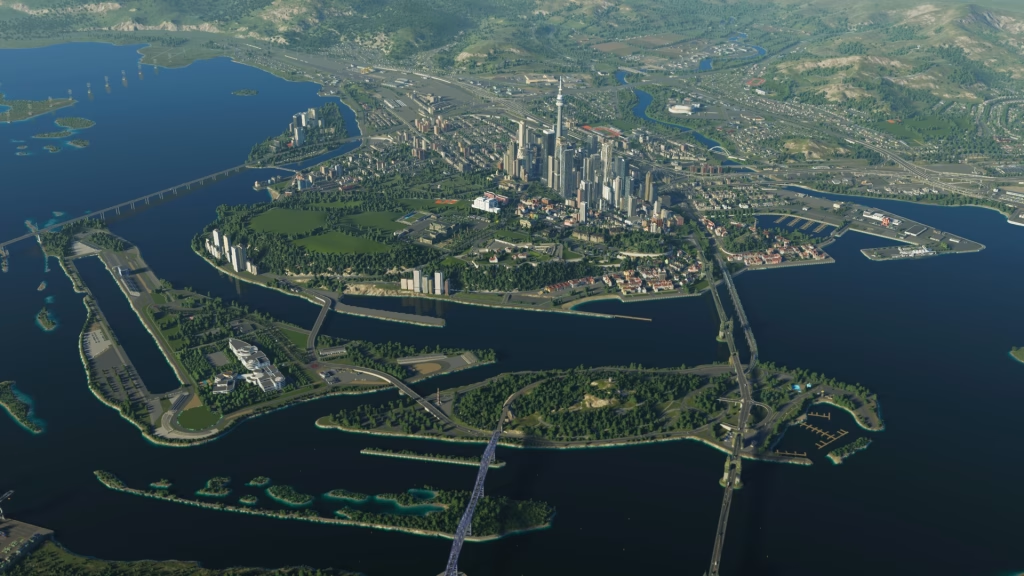
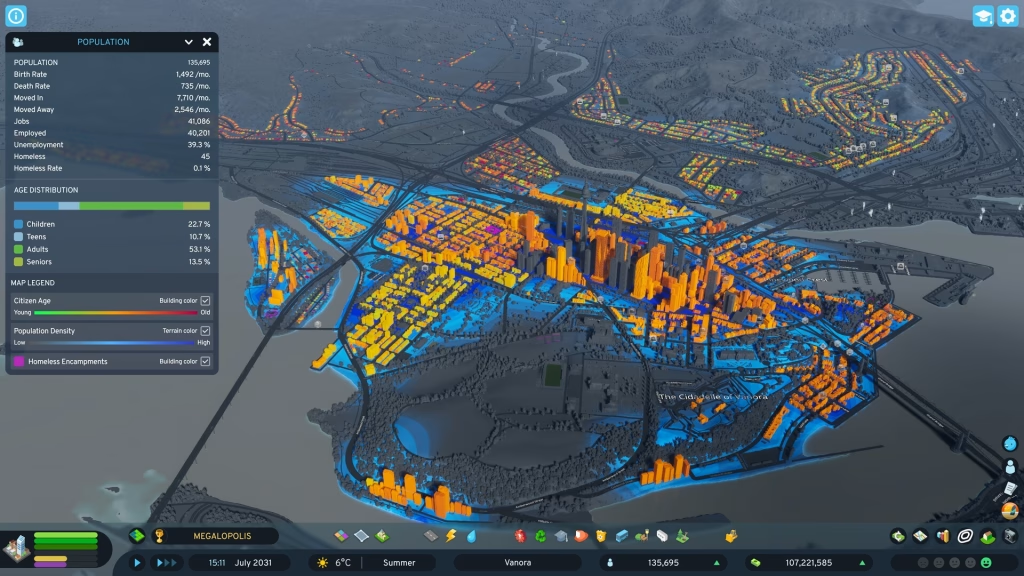
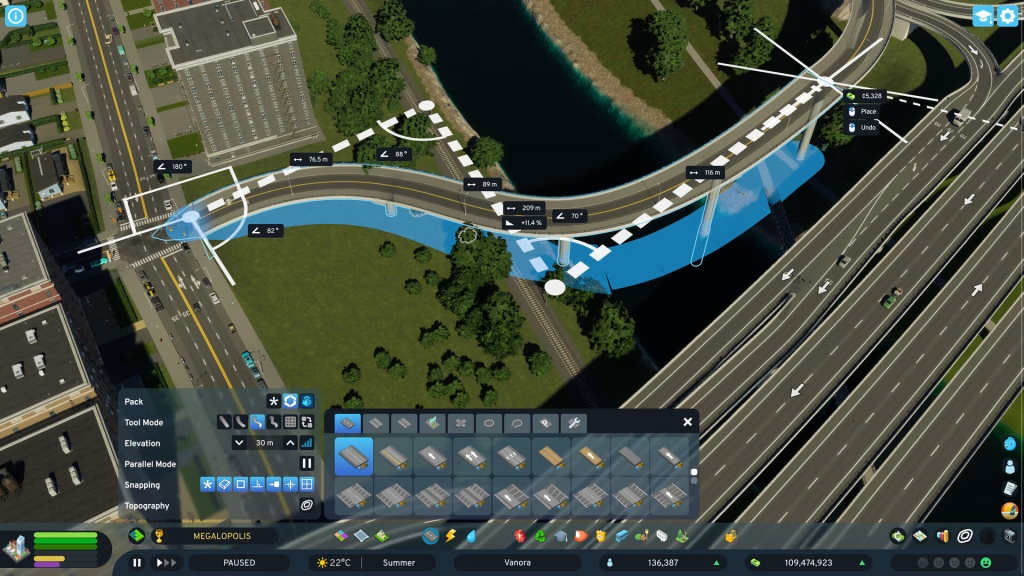
Like its predecessor, Cities: Skylines II gives the player a virtual plot of land to create a city within. Players can lay down roads, zoning, utilities, and city services to bring in residents and businesses. The player can set city policies like tax rates, fees and ordinances to influence how the city grows, from which they also receive funds to continue to expand the city.
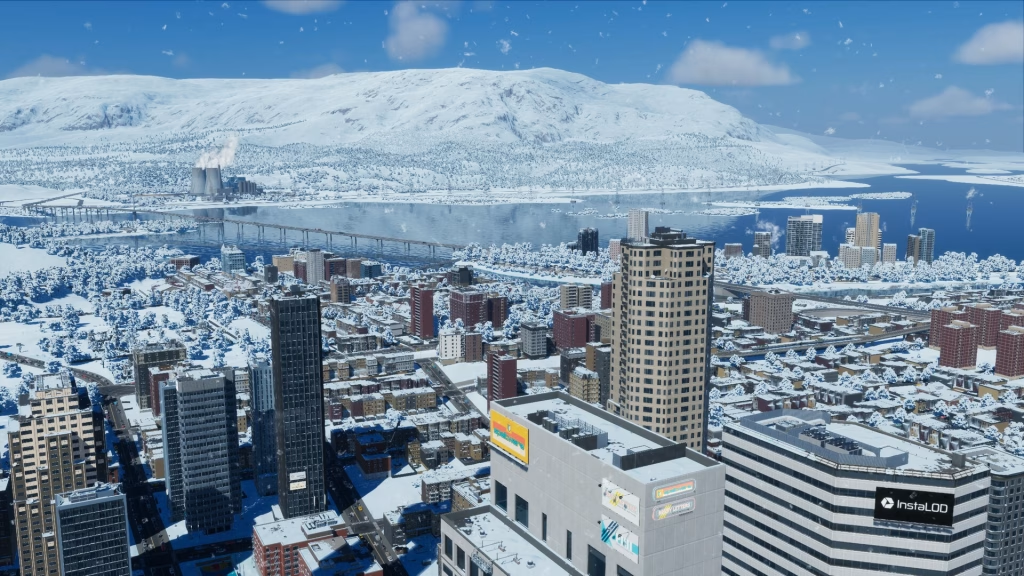
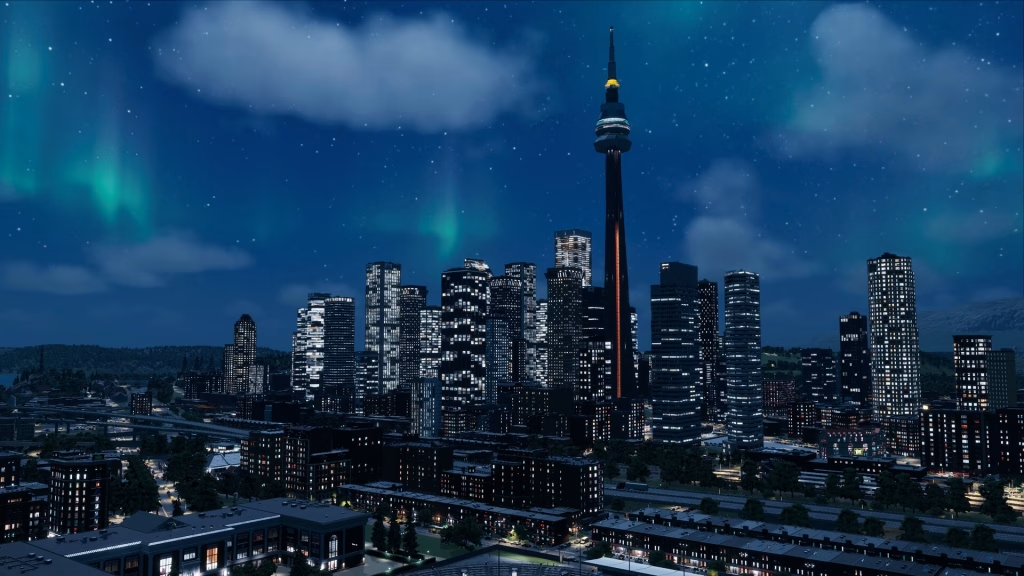
Initially the player is limited to nine tiles of space to build on but can expand outward by purchasing additional tiles with city funds as they achieve milestones. Whereas the first game was limited to nine tiles covering 33.1776 km2 (12.8099 sq mi) of area (81 tiles with user modifications) and the remastered edition to 25 tiles covering 92.16 km2 (35.58 sq mi), Cities: Skylines II allows players to build out to 441 tiles representing 171.33 km2 (66.15 sq mi) of area, meaning each individual tile is substantially smaller. With a third-party modification, this can be increased to 529 tiles, which increases the available area to 205.52 km2 (79.35 sq mi). Unlike the previous game which was limited to around 65,000 citizens being rendered at a time, the number of citizens that can be directly simulated in Cities: Skylines II is limited only by a player’s computer or console specifications. Each city can earn up to 2 billion currency units. Each map included with the game is based on a preset climate that influences weather behavior. Both the weather and the behavior of the city population follow annual and diurnal cycles, with each in-game day/night equivalent to one month of simulation time. Depending on the climate, the winter months may bring snow and other cold conditions, while summer weather may bring excessive flooding, forest fires and tornadoes. Such disasters can be mitigated with additional disaster response facilities and services within the city. Like its predecessor, Cities: Skylines II operates in a compressed time fashion.
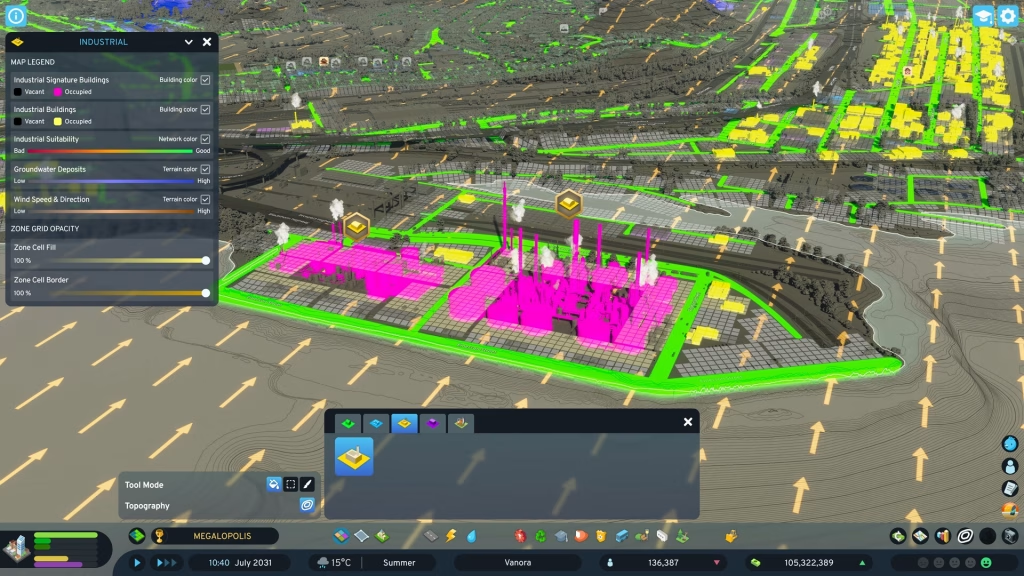
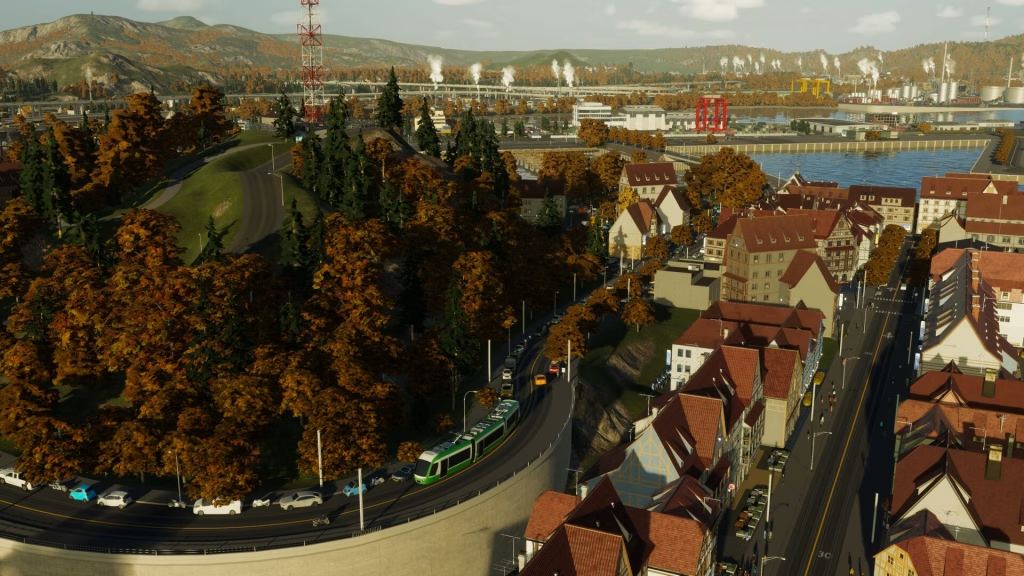
Cities: Skylines II improved and expanded upon the city building mechanics of the first game, including fully-realized transportation and economic systems, enhanced construction and customization options, including American and European architectural themes, and advanced modding capabilities. Laying down roads now automatically places water piping and electrical conduits with them. Players have more fine-tuning control of residential zones, businesses, industrial manufacturing, and offices, including more zone types such as low rent housing and mixed-use residential/commercial. Signature buildings can be unlocked by reaching specific milestones and can impact the land value and other properties of whatever zone or city they are placed in. Rather than purely distance as in the first game, the simulated citizens use more intelligent methods to determine traffic routes, using route length, costs, comfort, and agent preference. Services like police and fire stations can also be assigned to specific districts to improve their response times, in contrast to the first game. In addition to public safety services, deathcare, education, and waste management, Cities: Skylines II also adds in services for telecommunications and welfare. These services can now be expanded through upgrades of existing locations rather than having to build a separate service building. Passenger and freight transport options are more flexible, allowing for importing and exporting to other virtual cities, and rather than unlocking certain transport options based on city size, Cities: Skylines II has a technology tree on which players can spend development points to advance and unlock desired transport options.
Reference:



Recent Comments